3 Days / 2 Nights Mount Meru Trekking is a 3 Days trekking itinerary on Mount Meru via the Mount Meru Route route. It is designed for travelers who want a serious mountain experience with a clear day-by-day structure, sensible altitude gain, and support from an experienced crew rather than a rushed ascent.
What makes this route effective is how the terrain changes as you climb. Forest gives way to moorland, alpine desert, and finally the upper summit zone, so the trek feels progressive both physically and visually. Each stage has its own rhythm, and that steady progression is a major part of the experience.
The itinerary is paced to balance walking effort, rest, and acclimatization. Camp or hut stops are not simply overnight points; they are part of how the route prepares you for the summit push, especially on the longest climbing days and the final ascent window.
This route suits trekkers who value preparation, patience, and a realistic mountain plan. You do not need technical climbing skills for these climbs, but you do need endurance, a calm pace at altitude, and the discipline to treat acclimatization as seriously as the summit itself.
3 Days / 2 Nights Mount Meru Trekking leads you up the mountain stage by stage — each day a new altitude, a new ecological zone, and a measured step toward the summit.
-
1
Day 1:
Arusha (1400m) – Miriakamba Hut (2500m) Duration: 5-7 hours of hiking After early morning breakfast in Arusha (1400m), you will be picked up from your hotel and brought to the Momella Gate in Arusha National Park. At this time, the porters will organize and pack the belongings for the hike while you and your guide register with the Tanzania National Park (TANAPA).
You will then begin your ascent in Arusha National Park. The first day of hiking is similar to a walking safari; you should expect to see giraffes, zebras, antelope, buffalo, and potentially elephants near the trail.
Due to the high possibility of spotting wildlife, an armed ranger, hired through the National Park, is required to hike with our team for the duration of the hike. As you continue hiking, you will pass the Ngarenanyuki River and a beautiful waterfall at the base of Mt.
Meru. Upon arriving at Miriakamba Hut (2500m), your chef will prepare a hot dinner and washing water for you.
Enjoy the beautiful sunset and overnight.
-
2
Day 2 :
Miriakamba Hut (2500m) – Saddle Hut (3500m) Duration: 3-5 hours of hiking After breakfast, you will start ascending up the steep trail along the ridge of the saddle. You may see various wildlife along the way!
The trail has views of Mt. Meru Crater and the Ash Tray.
When you arrive at camp, you have the option of hiking Little Mt. Meru (3820 m) with your guide to further acclimate.
You will be served an early dinner, so you can receive ample rest before your midnight summit attempt. Get to sleep by 19h00!
-
3
Day 3 :
Saddle Hut (3500m) – Summit Attempt (4566m) – Miriakamba Hut (2500m) Duration: 12-14 hours of hiking Your guide will wake you at 00:30 A.M for tea and biscuits. You will then begin your summit attempt at 1:30 A.M.
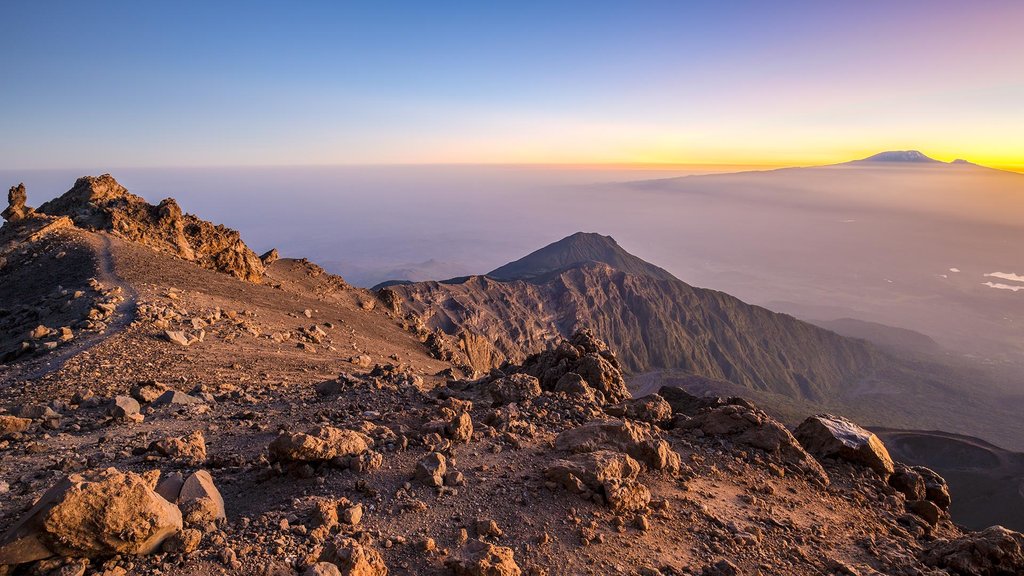
The trail starts off on a steep grade from Rhino Point (3800m) to Cobra Point (4350m). In the last hour of the hike, you will scamble on a rocky ridge between the crater and inner cliffs of Meru.
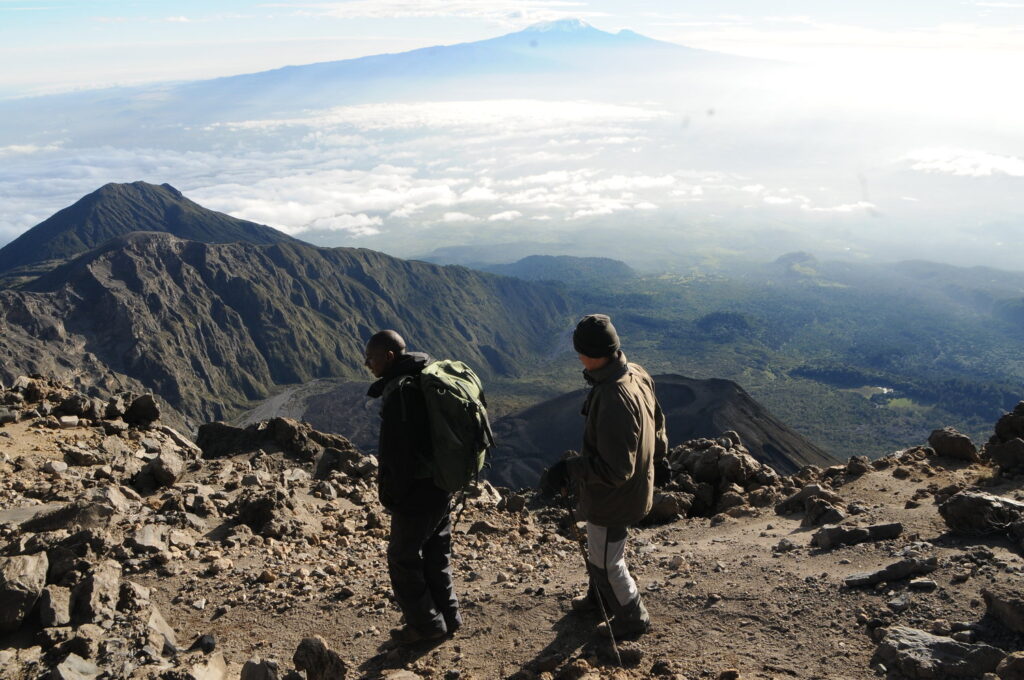
You will reach the summit of Meru (4565m) at sunrise with spectacular views of Mt. Meru Ash Tray and Mt.
Kilimanjaro. Enjoy your views then descend to Saddle Hut for a short break.
We take a short break and brunch at Saddle hut before continuing the descent to the Momella gate. Your transfer vehicle will be waiting for you at Momella gate ready to pick you at your hotel in Moshi or Arusha.
Price inclusive Items included: Transfer to/from Arusha National Park Overnight stays in Mountain Huts Professional, experienced, mountain guides All Park fees Rescue fees All meals while on the Mountain Guides, Porters, cook salaries and park fees Large portions of fresh, healthy nutritious food Clean, purified drinking water Crisis management and safety procedures Fair and ethical treatmen
All prices are per person. Final rates vary with route length, group size, and any safari or hotel extensions you add before or after the climb.
- – All park, conservation, camping, and rescue fees required for the route
- – Professional mountain guide, assistant guides, cook, and porter support
- – Private transfers between your hotel and the trek gate as listed in the itinerary
- – All meals on the mountain plus safe drinking water during the climb
- – Mountain hut accommodation as listed in the itinerary
- – Emergency oxygen, basic first-aid kit, and daily health monitoring on the mountain
- – Mount Meru armed ranger services and park logistics for the trekking section
Are You Ready for the Climb?
This 3 days reaches high altitude and should be approached with steady pacing, hydration, and realistic fitness preparation. The route climbs to 4,566 m · Socialist Peak, so altitude response matters more than speed. A longer, calmer ascent usually improves comfort and summit chances, especially when you listen closely to your mountain crew and allow time for acclimatization.
Recommended Gear Checklist
- Waterproof hiking boots · Essential
- Layered warm clothing for summit night · Essential
- Waterproof jacket and rain trousers · Essential
- Daypack and duffel bag · Essential
- Headlamp with spare batteries · Essential
- Sun hat, sunglasses, and sunscreen · Essential
- Trekking poles
- Refillable water bottles or hydration bladder · Essential
-
How difficult is the Mount Meru Route?
This route is best described as challenging. The main challenge is sustained trekking at altitude rather than technical climbing.
-
How many days should I allow for this trek?
This itinerary is planned over 3 Days, giving a clear stage-by-stage progression through the mountain route shown in the itinerary.
-
Do I sleep in huts or tents on this route?
This route uses mountain huts according to the imported itinerary and overnight camp references.
-
When is the best season to climb?
The usual best climbing windows are Jan–Mar, Jun–Oct, when trail conditions are generally more favorable and mountain visibility is often better.
Photo gallery will be added soon.