6 Days Kilimanjaro Marangu Route is a 6 Days trekking itinerary on Kilimanjaro via the Marangu route. It is designed for travelers who want a serious mountain experience with a clear day-by-day structure, sensible altitude gain, and support from an experienced crew rather than a rushed ascent.
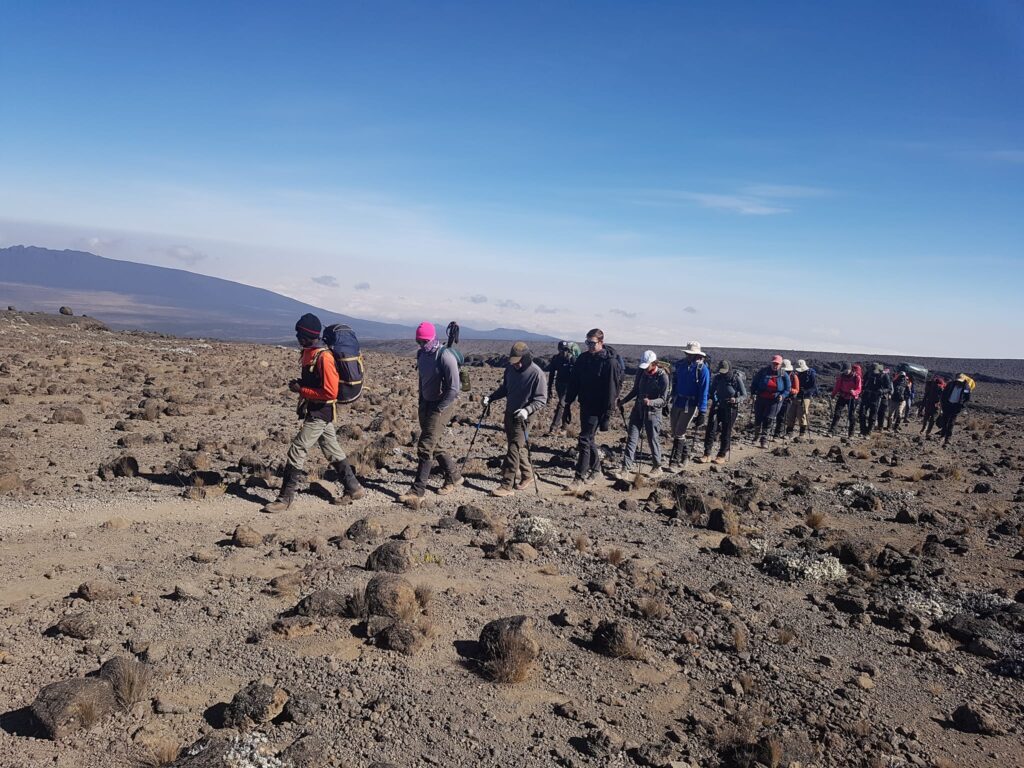
What makes this route effective is how the terrain changes as you climb. Forest gives way to moorland, alpine desert, and finally the upper summit zone, so the trek feels progressive both physically and visually. Each stage has its own rhythm, and that steady progression is a major part of the experience.
The itinerary is paced to balance walking effort, rest, and acclimatization. Camp or hut stops are not simply overnight points; they are part of how the route prepares you for the summit push, especially on the longest climbing days and the final ascent window.
This route suits trekkers who value preparation, patience, and a realistic mountain plan. You do not need technical climbing skills for these climbs, but you do need endurance, a calm pace at altitude, and the discipline to treat acclimatization as seriously as the summit itself.
6 Days Kilimanjaro Marangu Route leads you up the mountain stage by stage — each day a new altitude, a new ecological zone, and a measured step toward the summit.
-
1
Day 1: Arrive at Kilimanjaro Airport, transfer to Arusha city
Arrive at Kilimanjaro Airport, Transfer to Arusha city. *** A driver will meet you at Kilimanjaro Airport after you go through immigration and customs.
Look for someone with a sign that says “I Artist Adventure” and/or your name. It takes a minimum of 45 minutes to get to Arusha city with no traffic.
There will be a trek orientation with your Kilimanjaro guide today and an opportunity to get any rental items that you may need and also pack for the trek. You can leave extra luggage that is not needed on the trek at the hotel.
If you have time, we recommend an extra rest day before your trek.
Meals included: n/a Mid-Range Accommodations: Hotel or Lodge in Arusha city.
Hotel or Lodge in Arusha city.Overnight camp -
2
Day 2: Drive to Kilimanjaro National Park Rongai Gate (Nale Moru), Hike to Simba Camp
Altitude 2000m/6560ft to 2650m/8700ft Distance 6km/4mi Hiking 3-4 hours Habitat Montane ForestDrive to the attractive wooden village of Nale Moru (about 2 hours including a stop to get permits at Marangu). After signing in and preparing the porters, you will begin the hike on a wide path that winds through fields of maize and potatoes before entering the pine forest.
The track then starts to climb consistently but gently through an attractive forest that shelters a variety of wildlife. The forest begins to thin out and the first camp is at the edge of the moorland zone with extensive views over the Kenyan plains.
Elevation: 2000m/6560ft to 2650m/8700ft
Distance: 6km/4mi
Hiking Time: 3-4 hours
Habitat: Montane ForestMeals included: Breakfast, Lunch, Dinner Budget Accommodations: Simba Camp
Simba CampOvernight camp -
3
Day 3: Hike Simba Camp to Second Cave
Altitude 2650m/8700ft to 3450m/11,300ft Distance 6km/4mi Hiking 3-4 hours Habitat MoorlandThe morning hike is a steady ascent up to the Second Cave with superb views of Kibo and the Eastern ice fields on the crater rim.
Elevation: 2650m/8700ft to 3450m/11,300ft
Distance: 6km/4mi
Walking Time: 3-4 hours
Habitat: MoorlandMeals included: Breakfast, Lunch, Dinner Budget Accommodations: Second Cave Camp
Second Cave CampOvernight camp -
4
Day 4: Hike Second Cave to Kikelewa Camp
Altitude 3450m/11,300ft to 3600m/11,800ft Distance 9km/5mi Hiking 2-3 hours Habitat Semi-desertHead out across the moorland on a smaller path toward the jagged peaks of Mawenzi. The campsite is in a sheltered valley with giant senecios nearby.
Elevation: 3450m/11,300ft to 3600m/11,800ft
Distance: 9km/5mi
Walking Time: 2-3 hours
Habitat: Semi-desertMeals included: Breakfast, Lunch, Dinner Budget Accommodations: Kikelewa Camp
Kikelewa CampOvernight camp -
5
Day 5: Hike Kikelewa Camp to Mawenzi Tarn
Altitude 3600m/11,800ft to 4330m/14,200ft Distance 6km/4mi Hiking 3-4 hours Habitat Semi-desertA short but steep climb up grassy slopes is rewarded by superb views. Leave the vegetation behind shortly before reaching the next camp at Mawenzi Tarn, spectacularly situated in a cirque directly beneath the towering spires of Mawenzi.
The afternoon will be free to rest or explore the surrounding area as an aid to acclimatization. If you are spending an extra day on the mountain, you will camp for two nights here.
You can hike up and around Mawenzi for your acclimatization hike.
Elevation: 3600m/11,800ft to 4330m/14,200ft
Distance: 6km/4mi
Walking Time: 3-4 hours
Habitat: Semi-desertMeals included: Breakfast, Lunch, Dinner Budget Accommodations: Mawenzi Tarn Camp
Mawenzi Tarn CampOvernight camp -
6
Day 6: Hike Mawenzi Tarn to Kibo Hut
Altitude 4330m/14,200ft to 4750m/15,600ft Distance 9km/5mi Hiking 4-5 hours Habitat Alpine DesertCross the lunar desert of the ‘Saddle’ between Mawenzi and Kibo to reach Kibo campsite at the bottom of the Kibo crater wall. The remainder of the day is spent resting in preparation for the final ascent very early.
Elevation: 4330m/14,200ft to 4750m/15,600ft
Distance: 9km/5mi
Hiking Time: 4-5 hours
Habitat: Alpine DesertMeals included: Breakfast, Lunch, Dinner Budget Accommodations: Kibo Hut Camp
Kibo Hut CampOvernight camp -
7
Day 7: Kibo Camp to Summit and Horombo Hut
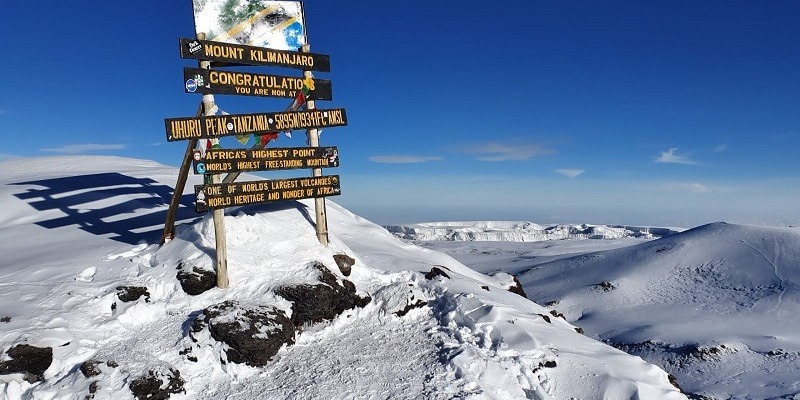
Altitude 4700m/15,500ft to 5895m/19,340ft Distance 6km/4mi up / 15km/9mi down Hiking 6-8 hours up / 15km/9mi down Habitat Alpine DesertVery early in the morning (midnight to 2 am), commence the climb to the summit on steep and heavy scree or snow up to Gilman’s Point located on the crater rim (elev 5700m/18,700ft). Continuing, we now ascend to Uhuru Peak, which is the highest point in Africa.
There are unbelievable views at every turn. Have your picture taken at the summit to show your friends and family.
From here we descend, stopping for lunch and a rest at Kibo before continuing on to the Horombo encampment. The beginning of this climb is done in the dark and requires headlamps or flashlights.
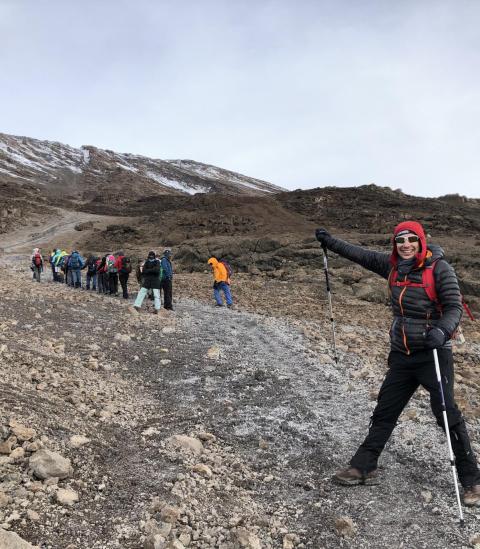
It will be very cold until you start descending, so you will need all of your warm layers. This is by far the most difficult part of the trek with many switchbacks.
Going slowly “pole pole” and an optimistic attitude will get you there! Down to 3700m/12,200ft
Elevation: 4700m/15,500ft to 5895m/19,340ft
Distance: 6km/4mi up / 15km/9mi down
Hiking Time: 6-8 hours up / 15km/9mi down
Habitat: Alpine DesertMeals included: Breakfast, Lunch, Dinner Budget Accommodations: Horombo Hut Camp
Horombo Hut CampOvernight camp -
8
Day 8: Hike Horombo Hut to trail head, drive to Arusha city
Altitude 3700m/12,200ft to 1700m/5500ft Distance 20km/12.5mi Hiking 4-5 hours Habitat ForestAfter breakfast, a steady descent takes us down through the moorland to the Mandara Hut. Continue descending through the lush forest path to the National Park gate at Marangu.
At lower elevations, it can be wet and muddy. Gaiters and trekking poles will help.
Shorts and T-shirts will probably be plenty to wear (keep rain gear and warmer clothing handy). A vehicle will meet you at Marangu village to drive you back to your hotel in Moshi (about 1 hour).
Don’t forget to tip your guides and porters. It is time for celebration!
Elevation: 3700m/12,200ft to 1700m/5500ft
Distance: 20km/12.5mi
Hiking Time: 4-5 hours
Habitat: ForestMeals included: Breakfast Mid-Range Accommodations: hotel or Lodge in Arusha city
hotel or Lodge in Arusha cityOvernight camp -
9
Day 9: Transfer to Kilimanjaro Airport
Drive to Kilimanjaro Airport for departure, or continue on for your safari.
Meals included: Breakfast Price inclusive
All prices are per person. Final rates vary with route length, group size, and any safari or hotel extensions you add before or after the climb.
- – All park, conservation, camping, and rescue fees required for the route
- – Professional mountain guide, assistant guides, cook, and porter support
- – Private transfers between your hotel and the trek gate as listed in the itinerary
- – All meals on the mountain plus safe drinking water during the climb
- – Mountain hut accommodation as listed in the itinerary
- – Emergency oxygen, basic first-aid kit, and daily health monitoring on the mountain
Are You Ready for the Climb?
This 6 days reaches high altitude and should be approached with steady pacing, hydration, and realistic fitness preparation. The route climbs to 5,895 m · Uhuru Peak, so altitude response matters more than speed. A longer, calmer ascent usually improves comfort and summit chances, especially when you listen closely to your mountain crew and allow time for acclimatization. Trekkers do not need technical climbing skills for Kilimanjaro, but they do need endurance for long walking days and summit night effort.
Recommended Gear Checklist
- Waterproof hiking boots · Essential
- Layered warm clothing for summit night · Essential
- Waterproof jacket and rain trousers · Essential
- Daypack and duffel bag · Essential
- Headlamp with spare batteries · Essential
- Sun hat, sunglasses, and sunscreen · Essential
- Trekking poles
- Refillable water bottles or hydration bladder · Essential
-
How difficult is the Marangu?
This route is best described as moderate. The main challenge is sustained trekking at altitude rather than technical climbing.
-
How many days should I allow for this trek?
This itinerary is planned over 6 Days, giving a clear stage-by-stage progression through the mountain route shown in the itinerary.
-
Do I sleep in huts or tents on this route?
This route uses mountain huts according to the imported itinerary and overnight camp references.
-
When is the best season to climb?
The usual best climbing windows are Jan–Mar, Jun–Oct, when trail conditions are generally more favorable and mountain visibility is often better.
-
What helps summit success on this route?
This route is known for best over the 6-day version. The biggest factors remain pacing, hydration, rest, and allowing the body time to adapt to altitude.
Photo gallery will be added soon.